

AN ECONOMY WITH A SOCIAL CONSCIENCE
 04.02.2024
 5 minutes

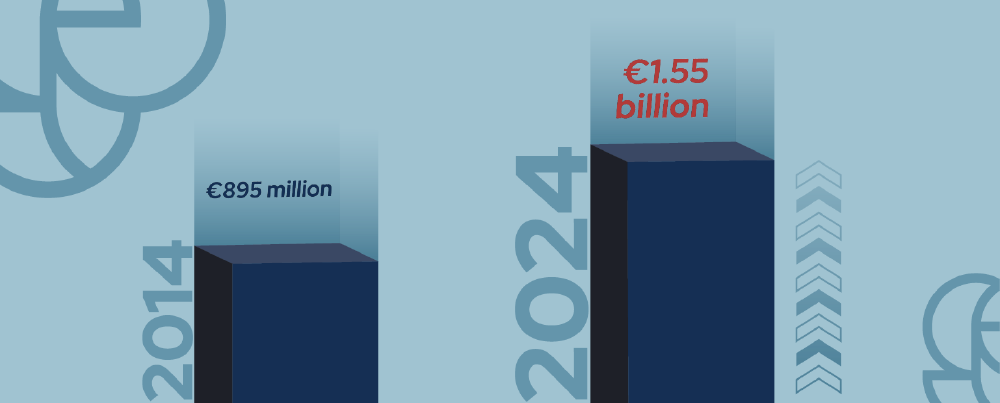
From an outlay of €895 million in 2014 social expenditure is this year estimated to shoot up to €1.55 billion.
Mark Musù is Permanent Secretary, Ministry for Social Policy and Children’s Rights.
Social security benefits take up nearly a quarter of Government’s total recurrent expenditure, making it a key component in the yearly recurrent expenditure. Contributory benefits make up over 80 per cent of social security benefits, with the bulk being spent on pensions and the rest going to non-contributory claimants mainly in receipt of social and supplementary assistance, child benefits, disability assistance and old age pensions.
Over the past decade, the social security network has been a primary beneficiary of the robust growth experienced by Malta’s economy. Indeed, social considerations have been a hallmark of annual budgets to reinforce the benefits framework and enhance it further with the creation of social measures essentially addressed to create a better quality of life for young and old, families with children, pensioners, vulnerable persons and persons with a disability. Importantly, they have been targeted to promote social activation and participation and at warding persons away from the benefit and poverty traps.
From an outlay of €895 million in 2014 social expenditure is this year estimated to shoot up to €1.55 billion, an increase of over 73 per cent. The biggest share will be drawn by contributory and non-contributory pensioners, whose number during the year is expected to reach the 100,000 mark. Not merely because of their numbers, but notably due to social measures purposely designed to bolster their incomes. Besides the annual cost of living adjustment, for the seventh year running pensioners are benefitting from increased pension rates.
Overall, the weekly increases awarded since 2014 amount to a minimum of €60.32, which translate into a cumulative annual total of €3,316. Several other pensioners were granted additional increases through other measures, including those on the minimum pension who gained higher increases exclusively enacted for them in 2016 and 2017. Several other pensioners saw a substantial increase in their take home pay through tax exemptions or reductions.
Retirement and widowhood pensioners are benefitting from additional increases in their pension rates through ongoing exercises to adjust widows’ pensions and the cost of living bonus. The processes, now in their third year, aim at establishing equivalence in survivors’ pensions and a level playing field in the award of the cost of living bonus.
A sizeable swathe of pensioners are also in line to draw higher pension rates through another remedial process set off this year to gradually bridge the pension gap between persons born before January of 1962 and those born after. Pensioners born before 1962 are now guaranteed to receive equal pension increases as those born after. But of the former, those whose pensionable income is reckoned to be at a maximum level stand to benefit from an adjustment pay-out of up to €9.47 weekly.
Families with children have likewise been prime beneficiaries of this year’s social measures.
Around 41,000 families with 62,000 dependents under 16 years have been awarded the largest ever increase in child benefits. The increase of €250 bumped up the child supplement, separately paid with the established children’s allowances, to €410 for children in means tested families and €390 for children in households with incomes over the means-test threshold.
Parents will henceforth continue to be supported if their children remain in education beyond the compulsory age with the annual payment of a special allowance of €500. It will be paid for three years as long as children continue to live with them and are in full-time education.
Families with new born or adopted children can now enjoy an increased child birth bonus: €500 if the child is the first born and €1,000 for additional births in the family.
Furthermore, working heads of households with children below the age of 23 years have been accorded an across the board increase of €50 in their In-Work Benefit rates, with the highest payable rate for each child reaching €1,550.
Arguably, the hallmark of this year’s budget was the re-run of the Additional COLA mechanism, but in a modified form to better counter the inflationary pressures on the purchasing power of households with low to medium incomes. The mechanism is now based on an estimate of the inflation rate computed on the basis of the consumption basket of retired or low income households. Eligibility has been set to cover all those earning less than the median equivalized income. Through these changes a bigger number of households are drawing payments as a top-up to the Cola adjustment.
As acknowledged in a policy note recently published by the Central Bank, significantly these pay-outs, together with increments in the national minimum wage and increased family and pension benefits have been instrumental in easing the inflationary pressures on the purchasing power of retired and low-income households.
.png)
.png)




.png)