

CASA LEONE — THE HOUSE OF LIONS
 16.08.2022
 5 minutes

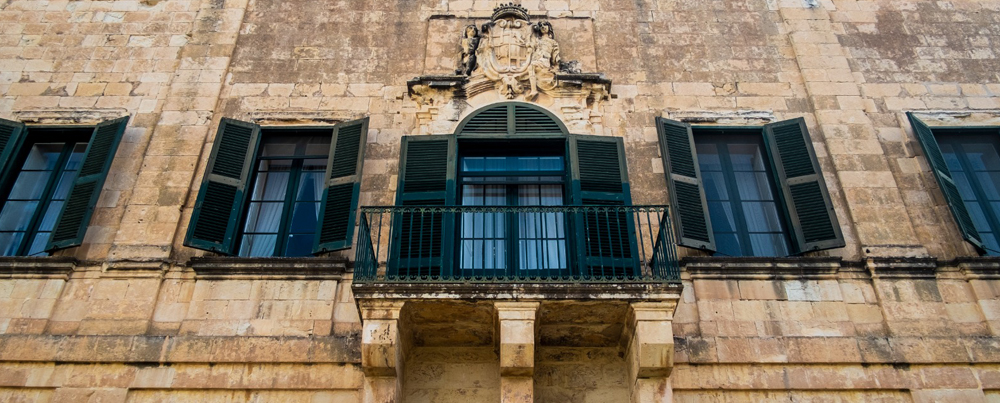
This building was erected during the reign of Portuguese Grand Master Antonio Manoel de Vilhena (1722-1736). It was built with the purpose of being the Grand Master’s summer palace in 1730 and was known as Vilhena Palace. It is worth noting that when this palace was built, the surrounding area was still agricultural, with an aqueduct nearby supplying water from Rabat and Dingli to Valletta. The aqueduct was built at the beginning of the seventeenth century.
Casa Leone is known by this name because of four lion statues adorning its facade. The lion forms part of the emblem of Grand Master Vilhena. The palace’s architect was French military engineer Charles Francois de Mondion (1681-1773). Its style is Baroque, with a large garden at the back which, in 1977, was largely cut off and opened to the public as the Romeo Romano Garden.
The venue has served various functions throughout Maltese history. During the blockade against French rule (1798-1800), it served as the military headquarters of the Maltese. In the British colonial period, the palace was used as the residence of the British Governors and later as the residence of the Governor Lieutenant. All their emblems now adorn the palace’s front hall in their memory, close to the ceiling.
During World War II (1940-1945), Casa Leone was used as a storehouse for the Museum’s antiques collection and served this purpose until 1954. From then onwards, until 1968, it housed the Santa Venera primary school until the students were transferred to another school. Between 1977 and 1978 restoration took place and the palace was then used to host foreign dignitaries.
In recent times the venue has served as an office for several ministries, the current one being the Ministry of Transport, Infrastructure and Capital Projects. The building was included in the 1932 Antique Protection List and was scheduled by the Malta Planning and Environment Authority in 2009 as a first-degree national monument. More recently, in 2012, Casa Leone was included in the National Inventory of the Superintendence of National Heritage.
.png)
.png)



.png)