

Behind the Blue Heart: Shining a Light on Human Trafficking
 30.07.2025
 5 minutes


The World Day Against Trafficking in Persons, commemorated annually on 30th July, serves as a global reminder of the urgent need to combat human trafficking, a serious violation of human rights. This year’s theme, “Human Trafficking is Organised Crime – End the Exploitation,” calls upon institutions to step up their role in tackling trafficking networks and protecting individuals at risk.
Human trafficking is a global issue that transcends international borders. It is a complex crime that involves the exploitation of people through coercion, deception or other means, for the profit of others. This crime violates the fundamental rights and freedoms of millions across the world, and can affect anyone regardless of age, gender, or nationality.
Victims may be trafficked for purposes such as sexual exploitation, forced labour, domestic servitude, forced criminal activity, illegal adoption, forced marriage, and exploitation of surrogacy. Human trafficking remains one of the most pressing and complex human rights challenges of our age and with advancements in digital technology, trafficking has also moved online, including in the form of cyber scams where victims are manipulated into committing online fraud. Traffickers also exploit technological advancements including AI for online recruitment and victim control.
Since 2008, Malta has been a Party to the Council of Europe Anti-Trafficking Convention. In line with the requirements of the Convention, Malta adopts a coordinated and multidisciplinary approach, to incorporate the prevention of human trafficking, the protection of victims’ rights and the prosecution of traffickers.
The Human Rights Directorate (HRD) has led the coordination of Malta’s anti-human trafficking efforts since 2020, with the aim of streamlining efforts between various stakeholders. In this context, HRD led the development of the ‘National Strategy and Action Plan on Combatting Trafficking in Human Beings in Malta (2024-2030).’ This Strategy prioritises a human rights-based, victim-centred and multidisciplinary approach to eliminating exploitation. It also strengthens institutional frameworks and promotes inter-agency cooperation, both of which are cornerstones of effective public administration.
Raising awareness on the matter is a key pillar of Malta’s anti-trafficking response. The Blue Heart Campaign, led globally by the United Nations Office on Drugs and Crime (UNODC), is an awareness raising initiative to fight human trafficking and its impact on society. It seeks to encourage involvement from governments, civil society, the private sector, and individuals alike, to inspire action and help prevent this crime. The Blue Heart represents the sadness of the victims of trafficking, whilst reminding us of the cold-heartedness of those who buy and sell human beings.
It is important to remember that organised criminal groups are key drivers of human trafficking. In fact, 74% of traffickers operate within organised crime groups. This year’s Blue Heart Campaign emphasises the vital role of law enforcement and the criminal justice system in dismantling organised trafficking networks while ensuring a victim-centred approach.
Within the Public Service, public officers play a vital role in identifying potential signs of trafficking and ensuring cases are referred through the appropriate channels. Exploitation is not always visible, and human trafficking often hides in plain sight. Therefore, it is essential that all public officers remain vigilant, informed and proactive.
What Can Public Officers Do?
Raise awareness: Use opportunities within your entity to inform others, including colleagues and other stakeholders, about the issue.
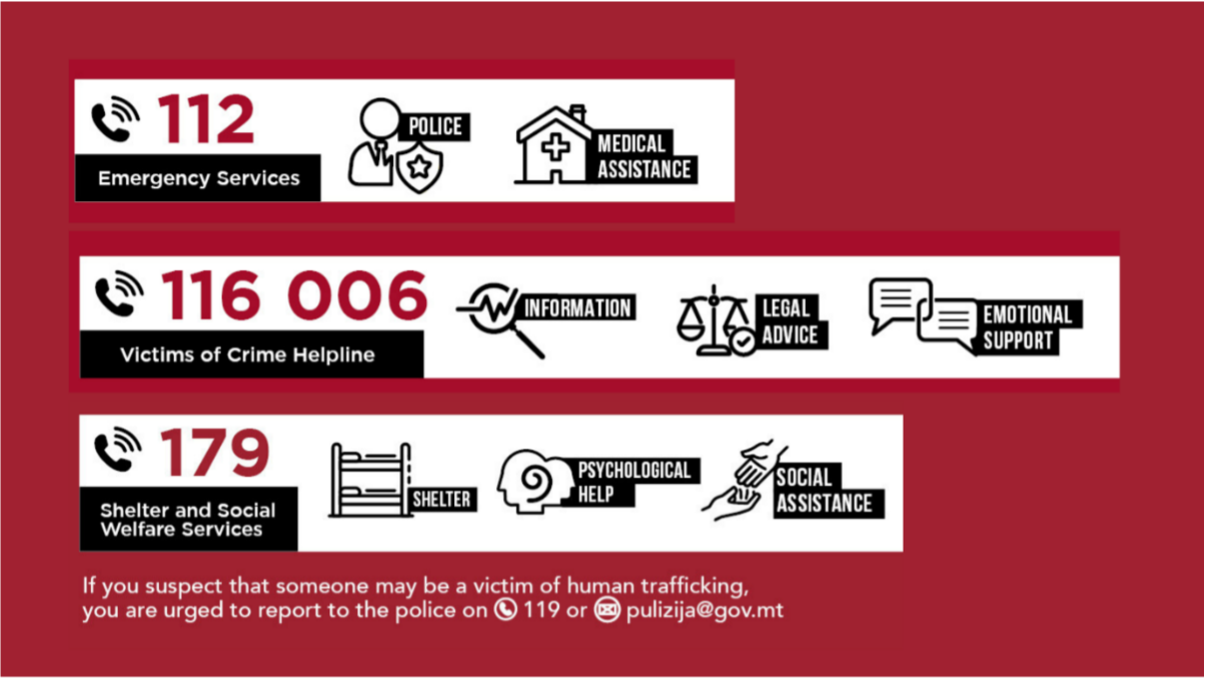
If You Suspect a Case of Trafficking
Public officers who suspect a trafficking case should take immediate steps to report the matter to the competent authorities.
As Malta continues to strengthen its national response to human trafficking, the role of the Public Service remains critical. Across all sectors, including enforcement, policy, education, health, social welfare, and administration, public officers have a key role to play in combatting this crime.
This World Day Against Trafficking in Persons serves as a timely reminder of our shared responsibility and of the meaningful impact the Public Service can make. By leading by example, public officers can help tackle exploitation and promote justice in all areas of life.
.png)
.png)




.png)